Hop History
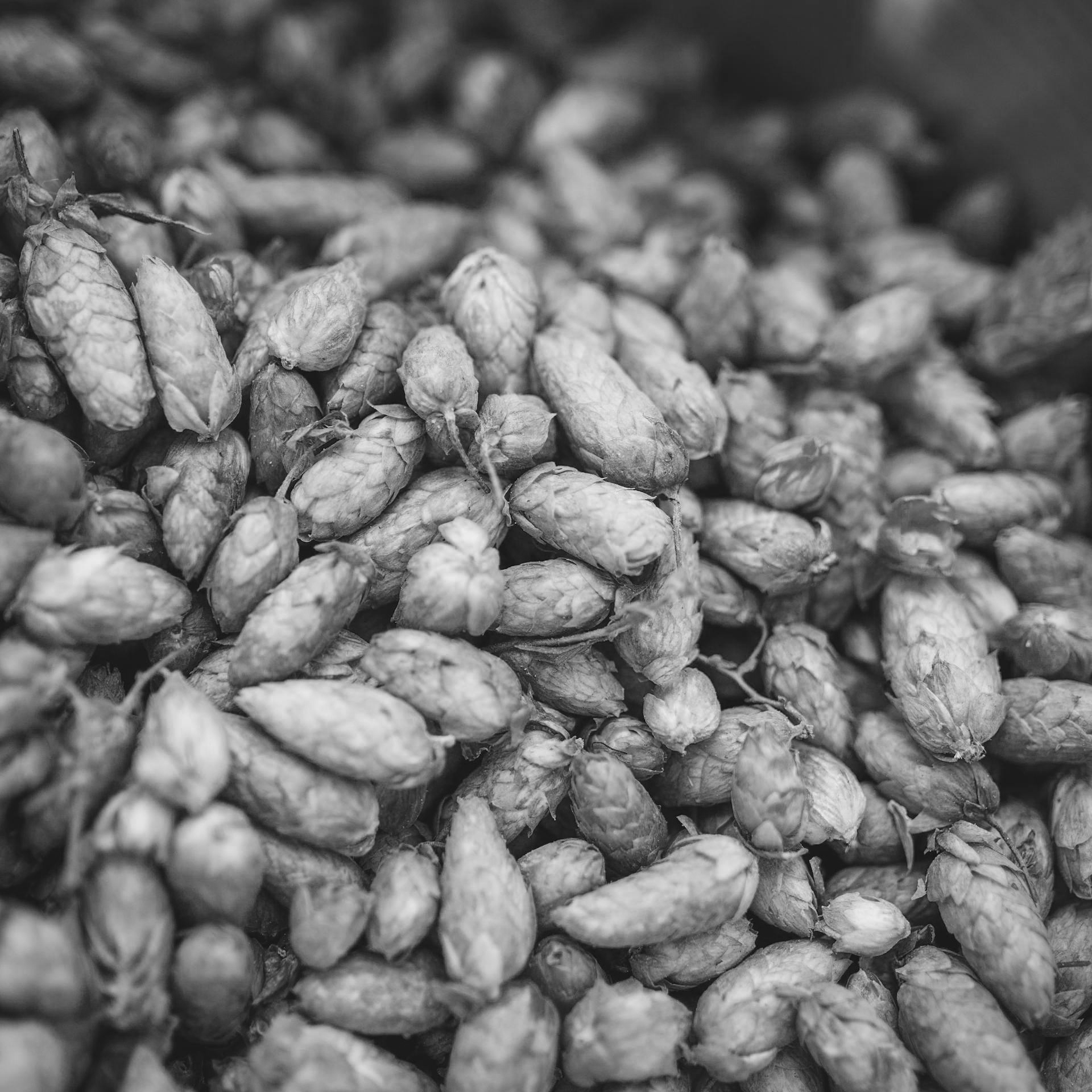
OK, let’s talk about Hops, Baby. Let’s talk about Cones and Strings, let’s talk about all the flavors, and aromas, that may be. Let’s just talk about Hops.
What Are Hops?
Strictly scientifically speaking, the hop plant is Humulus lupulus, a vigorous, perennial climbing vine—or “bine”—of the Cannabaceae family. Its cousin, Hemp, currently garners most of the controversial press, but for beer lovers, the hop is the bees knees. Hops are dioecious, meaning they have separate male and female plants; however, only the unpollinated female hop cones are used in brewing. Commercially, hops are grown on towering, 20-foot-tall trellis systems, forming vast green, amazing smelling fields that are typically harvested in the late summer months of August and September.
Hops’ particular area of expertise lies in their incredible collection of oils, resins, and volatile compounds, including Alpha Acids (the primary bittering agent) and Terpenes (the source of complex aromas and flavors). These compounds are incredibly impactful, serving multiple roles in preserving, bittering, and flavoring one of humanity’s oldest beverages: beer.

Beer Before Hops
Beer has been around for a long… long time. Even longer than your grandma’s plastic-covered sofa. While the basic gist of a malted grain grist bill has remained the same for centuries, the list of random weeds, flowers, and other additives used to create a balanced, boozy beverage has historically been extensive—and sometimes bizarre. This earlier era of brewing utilized ingredients like heather, sweet gale, and horehound. Just think of the taproom conversations, “Wow man, this Double Wormwood Ale really pops of Bog Myrtle and Mugwort!”
The Monastic Discovery: 822 AD
Lucky for us—and for all the wildflowers just minding their business being pretty—a pivotal change occurred. In 822 AD, some forward-thinking Benedictine Monks in Northern France decided to throw some hops they had growing around their monastery into their brew kettle. Beyond the immediately enjoyable, more refined flavor and clean bitterness it created compared to herbs, hops added a significant boost of preservative power to their concoction. The acids and resins in the hops acted as a natural antimicrobial agent. This allowed beer to last longer, taste better, and travel farther via trade routes.
Soon after, everyone was cultivating and brewing with hops, slowly pushing ingredients like Yarrow, Dandelions, and Marsh Rosemary to peacefully grow in the field. Well… save one sect of rural brewers that was systematically demonized and pushed out of the trade by the urban brewer guilds for their gruit recipes… but that’s a story for another day (Hallowtide anyone?).
Hops Become Essential
For the next 1200 or so years, hops chugged along, judiciously being added to the boil stage of brewing. Their primary role was to give beer a bitterness—a counterbalance to the residual malt sweetness—and to help the beer stay fresh in its oaken barrels.The most famous—and perhaps most debated—use of hops in this period is the origin of the India Pale Ale (IPA). hops might or might not have been added in great excess to barrels of beer bound for the British Raj, hence creating the original, highly-hopped Pale Ale. Now, while the authenticity of this IPA origin story is still debated by beer historians, usually over a few pints, the fact that Malt and Hops became intrinsically linked in the production of beer is not.
This essential pairing was famously codified in Bavaria’s 1516 Reinheitsgebot (German Purity Law), which strictly limited beer ingredients to water, barley, and hops. Hops were not only notated in every brewer’s ledgers throughout the UK and Belgian monasteries but became an assumed necessity. If you were brewing beer, you were using hops.
Regional Hop Styles Emerge
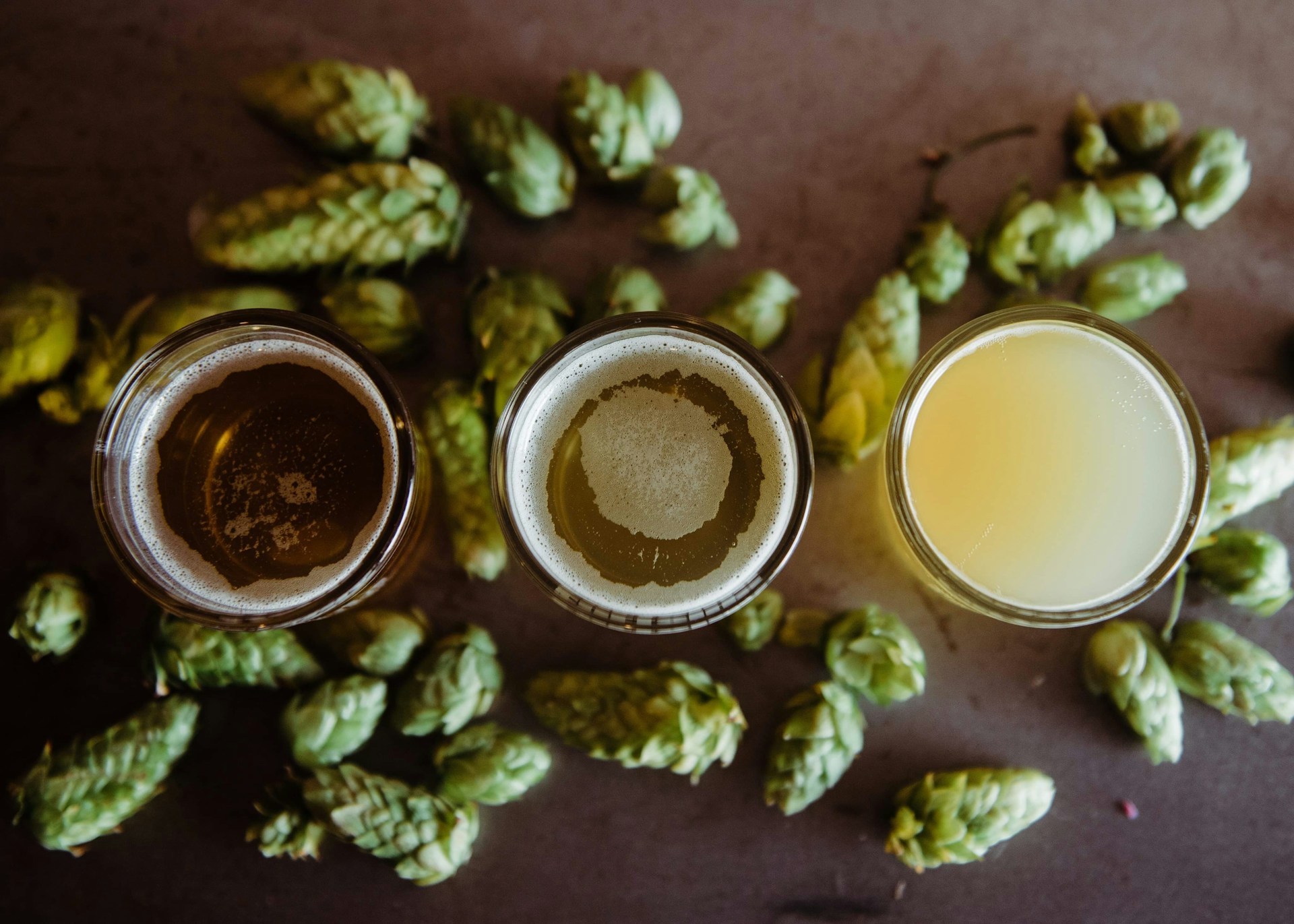
Hops even did their part to develop the distinct styles of beer in the regions where they were grown. German lager styles embraced the soft, elegant, clean character of the “Noble” hop varieties such as Hallertauer Mittelfrüh, Tettnanger, Spalt, and Saaz. These European varieties offered subtle floral, spicy, and herbal notes. Meanwhile, the average blokes across the channel brewed traditional English ales that supported the earthier, woodsy, and subtly fruitier hops cultivated in merry ol’ England, like Fuggles and Goldings.
The American Craft Beer Revolution
Then came the seismic shift: the American Craft Beer Revival in the Post-2000s. American Craft Brewers, many of whom cut their teeth homebrewing and mimicking classic styles from across the world, were now brewing for the masses. They built on the earlier foundational works by pioneers like Anchor Brewing and Sierra Nevada Brewing. Crucially, they wholeheartedly embraced the continued advancement of Hop Breeding programs that had started the American “Ignoble Flavor” with Cascade, the variety that was first commercially grown in Oregon in 1968. Cascade brought a revolutionary grapefruit and piney character that was entirely new to the brewing world.
American Craft Brewers wanted more flavors, louder flavors. Hops became bigger, bolder, juicy, dank, tropical, citrusy, and resinous—along with 100 other vivid descriptions that now echo throughout every taproom across the country. The brewers threw out the rulebook. Styles be damned: they began to heavily Dry Hop their Kolsch’s and Pilsners, acts would have their Continental counterparts clutching their pearls. They pushed new styles, like the Double IPA and West Coast IPA, into areas that required a complete retooling of brewing techniques.
The Hazy IPA Revolution
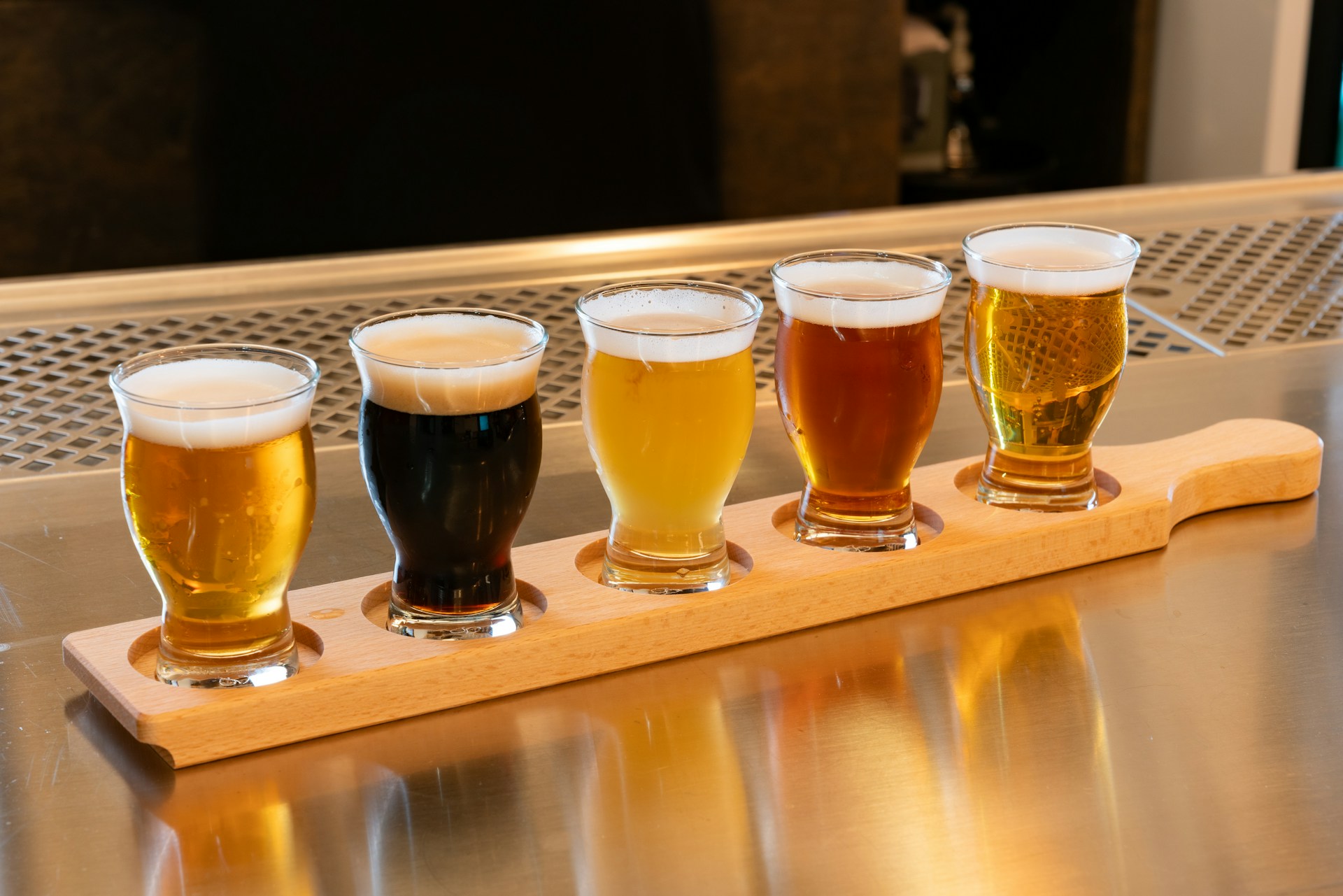
The culmination of this revolution is the Hazy IPA (or New England IPA). Think about spending decades learning how to make beer as pristine and clear as possible, only to pull a 180 to make a citrus juice-bomb Hazy IPA. Similar to those same Monks in the 800s discovering the preservative qualities of hops, modern brewers stumbled into understanding how the high Polyphenol levels and specific oil content of certain hop varieties interact with particular strains of brewing yeast to create “Haze Positive” combinations. This discovery helped them lock in stable, lasting haze levels in these modern styles, preventing the particles from settling out over time.
While the hop cone itself is not going anywhere soon, that continued, insatiable need for bigger, bolder, and more consistent flavor is fundamentally changing how brewers utilize them. Just as pelletized hops (compressed, ground cones) took over the cumbersome loose leaf hops of old, now advanced hop products are finding their essential niche in the modern Brewing Industry.
This new generation of hop products extracts and concentrates the key compounds:
- For clean bitterness: Brewers can use products like Alpha Acid Extracts, which offer pure bitterness without introducing any vegetative matter, leading to cleaner flavors.
- For pure aroma: Highly concentrated products like hop oils or terpene isolates allow brewers to dose massive amounts of specific grapefruit, tropical, or piney aromas post-fermentation without any added bitterness.
- For high efficiency: Products like Cryo Hops® remove the majority of the inert vegetative matter, leaving behind a highly concentrated lupulin powder that is more efficient in the brew kettle and fermentation vessel.
The Future of Hops
You, the Craft Beer drinker, keep wanting unique and exciting flavors. Well, you’re in luck, because Brewers, the hop farmers, and the ever-evolving Humulus lupulus plant will continue to advance the potential for one of the oldest and most complex beverages in human existence.
—Christian Dufresne
